Exploring the Reported Outcomes of Vedic Mānas Yoga
Across the world, educators, psychologists, neuroscientists, and parents are searching for effective ways to help children thrive in an increasingly distracted environment.
Reduced attention spans, excessive screen exposure, academic pressure, emotional stress, and information overload are becoming common challenges for students of all ages.
Against this backdrop, awareness-based training systems such as Vedic Mānas Yoga have attracted growing interest due to reports of significant improvements in concentration, confidence, memory, and cognitive performance among participants.
Observations That Have Sparked Interest
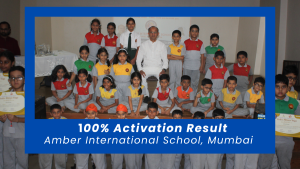
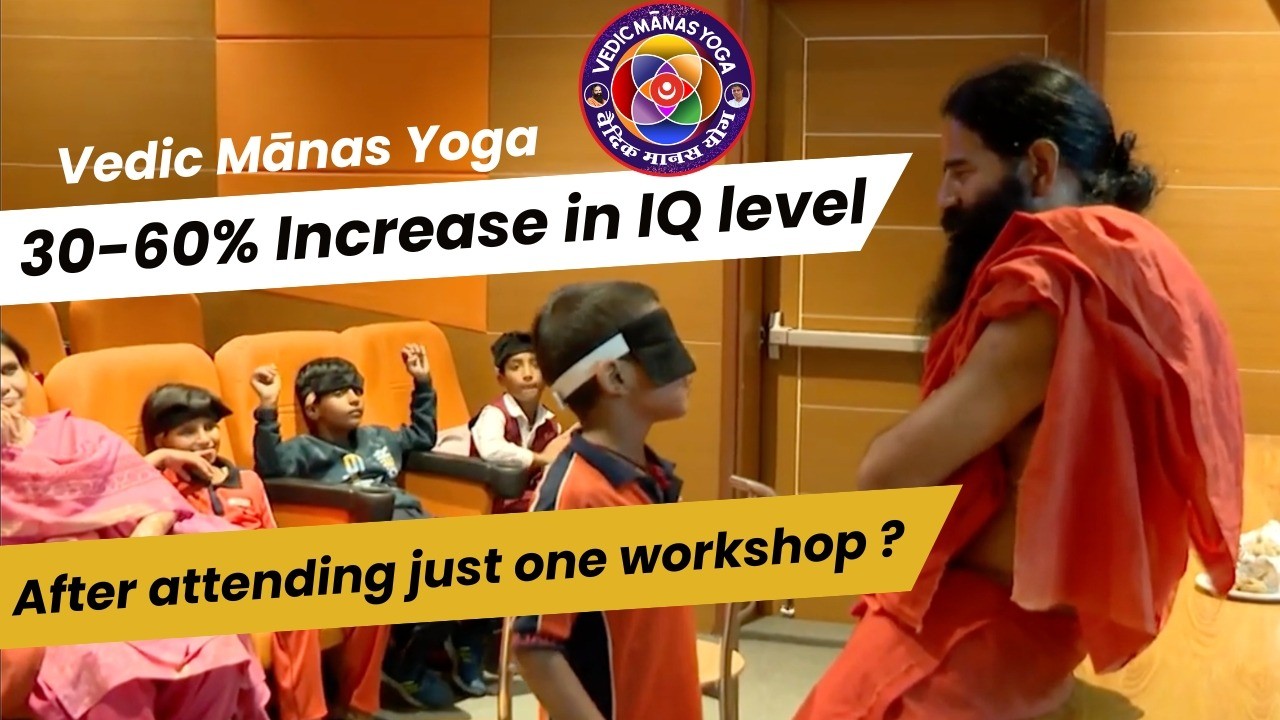
During various Vedic Mānas Yoga workshops conducted under the guidance of Shri Arvind Rana Ji, children have participated in a range of awareness-based exercises and demonstrations that have generated considerable curiosity among parents, educators, and observers. Supporters of the program have reported notable improvements in cognitive assessment scores, attention levels, learning engagement, memory retention, and self-confidence following intensive workshops.
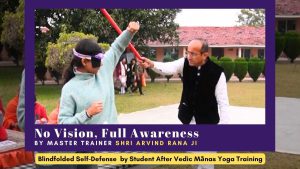
In some demonstrations, children have participated in blindfold-based activities involving colour identification, object recognition, and reading exercises, leading many observers to explore deeper questions regarding attention, perception, awareness, and human potential.
While such demonstrations continue to be a subject of discussion and interpretation, they have undoubtedly sparked interest in understanding how structured awareness training may influence learning and cognitive development.
Understanding IQ Beyond a Number
IQ is often associated with intelligence, but many experts today recognize that human performance depends upon a broader set of abilities, including: Attention control, Working memory, Processing speed, Emotional regulation, Learning readiness, Cognitive flexibility and Self-confidence.
A child who is calm, attentive, emotionally balanced, and mentally engaged often performs better across multiple cognitive tasks. This raises an important question: Can awareness-based training help strengthen the underlying mental processes that contribute to improved cognitive performance?
How Vedic Mānas Yoga May Support Cognitive Development
1. Strengthening Concentration
Concentration is the foundation of all learning. When attention becomes stable, children are better able to absorb information, solve problems, and retain knowledge. Vedic Mānas Yoga places significant emphasis on training attention and conscious awareness.
2. Improving Mental Clarity
A distracted mind often struggles to process information efficiently. Awareness-based practices encourage mental calmness, allowing children to direct their energy toward learning rather than distraction.
3. Enhancing Memory Performance
Memory improves when information is received with attention and processed with clarity. Many students report better recall and increased confidence in academics following regular awareness and concentration practices.
4. Building Emotional Balance
Research increasingly suggests that emotional wellbeing directly affects learning outcomes. Children who feel secure, confident, and emotionally balanced are often better equipped to perform academically.
5. Developing Self-Confidence
Confidence can significantly influence cognitive performance. When children believe in their abilities, they participate more actively, take on challenges, and engage more deeply in learning.
Ancient Wisdom and Modern Education
Ancient Vedic traditions have long emphasized the development of: Awareness, Self-observation, Concentration, Mental discipline & Conscious attention.
Modern educational psychology and neuroscience similarly recognize the importance of attention training, mindfulness, cognitive engagement, and neuroplasticity. Vedic Mānas Yoga attempts to bring these principles together in a structured format designed for contemporary learners.
A New Perspective on Human Potential
Whether viewed through the lens of education, psychology, or personal development, one message remains clear: Children possess far greater potential than we often assume.
When provided with proper guidance, disciplined practice, and a supportive learning environment, they can develop stronger focus, greater confidence, improved self-awareness, and enhanced learning capabilities. The most important outcome may not be a number on an IQ scale. The real transformation lies in helping children become: More attentive, More confident, More emotionally balanced, More aware & More capable learners
Looking Forward
As awareness-based learning continues to gain attention globally, programs such as Vedic Mānas Yoga invite educators and parents to reconsider an important possibility:
What if the key to unlocking greater academic performance and human potential begins with training attention itself? The future of education may depend not only on what children learn, but also on how well they learn to focus, observe, and become aware.